
Listen, subscribe, and leave a review on:




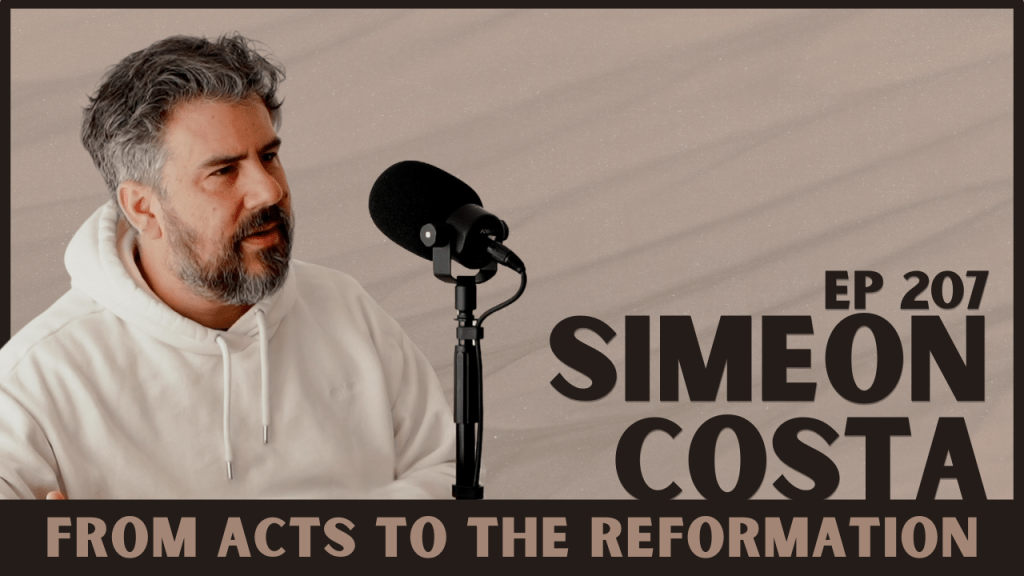
In this episode, I had the privilege of sitting down once again with my good friend Evangelist Simeon Costa, the creator of the Life Studies Bible study series. Simeon has been on the podcast several times, and every conversation with him goes deep into Scripture and always leaves me stirred to study more.
This time, we tackled one of the most important and often-debated questions in Christianity:
When does a believer receive the Holy Spirit?
Many Christians assume that the Spirit is received automatically at the point of belief or confession. But as Simeon and I explored, the Bible reveals a very specific and powerful pattern that defines what it truly means to be born again.
What We Talked About
Throughout our conversation, Simeon and I unpacked the difference between what he calls “historical Christianity” — beliefs shaped through centuries of councils and creeds — and “biblical Christianity”, which finds its authority in the Word of God.
We explored how traditions like the Sinner’s Prayer and the idea of being saved by confession alone are actually modern inventions, not teachings of the early church. Simeon showed how every conversion account in the Book of Acts follows the same pattern: repentance, baptism in Jesus’ name, and receiving the Holy Spirit — with the evidence of speaking in tongues.
We also dug into Romans 10, a passage that’s often quoted to support salvation by belief alone. Simeon explained that Paul’s letter wasn’t written to unbelievers — it was written to the church in Rome, to people who had already experienced new birth. Paul’s words about confessing and believing were about living out faith, not beginning it.
10 Key Takeaways
- The Bible Is the Lens, Not History.
We must interpret all doctrine through Scripture first — not through later traditions or denominational filters. - There’s No Sinner’s Prayer in Acts.
Nowhere in the New Testament do the apostles lead anyone in a salvation prayer. The call was always to repent, be baptised, and receive the Holy Spirit. - Acts Is the Blueprint.
Every conversion — from Jews to Gentiles — follows the same Spirit-led pattern. The book of Acts isn’t descriptive; it’s prescriptive. - Romans 10 Is for Believers.
Paul’s message about confession reinforces faith already in motion. It doesn’t replace baptism or Spirit baptism. - Faith and Obedience Work Together.
True faith produces obedience. Baptism isn’t “earning salvation” — it’s responding to God’s Word in faith. - The Holy Spirit Isn’t Received by Assumption.
In Acts 8, 10, and 19, believers received the Spirit after believing and being baptised. Faith alone wasn’t the finish line. - The Reformation Changed Emphasis, Not Truth.
Martin Luther’s revelation on faith was important, but the pendulum swung too far from obedience to grace without action. - Every New Testament Writer Was Apostolic.
Every author of the New Testament experienced baptism in Jesus’ name and Spirit infilling — the same pattern we still follow today. - Speaking in Tongues Is a Sign of Inclusion.
Tongues were how God confirmed that the Gospel was for Jews, Samaritans, and Gentiles alike — a sign that transcended culture. - Three Non-Negotiables of Apostolic Faith:
- The oneness of God revealed in Jesus Christ.
- The authority of Scripture.
- The new birth through water and Spirit.
These are, as Simeon put it, “three hills worth dying on.”
Scriptures We Discussed
Acts
- Acts 2:1–4 — The Spirit poured out at Pentecost.
- Acts 2:38–39 — Peter’s command to repent, be baptised, and receive the Spirit.
- Acts 8:5–17 — Samaria’s conversion and Spirit infilling.
- Acts 10:44–48 — The Gentiles receive the Holy Ghost.
- Acts 19:1–6 — John’s disciples rebaptised in Jesus’ name.
Romans
- Romans 10:8–13 — Confession and belief explained.
- Romans 8:9–11 — The Spirit of Christ essential to belonging to Him.
John
- John 3:3–8 — Born of water and Spirit.
- John 14:16–18 — Jesus promises the Comforter.
Other References
- Genesis 1:26–27 — “Let us make man” — singular purpose, not plurality.
- James 2:14–26 — Faith without works is dead.
- 1 Corinthians 14:2–4 — Tongues for personal edification.
- Joel 2:28–29 — The prophecy fulfilled in Acts 2.
Final Thought
This conversation with Simeon Costa reminds believers that truth is not determined by tradition or time but by the timeless authority of God’s Word. The pattern for salvation given in Scripture — repentance, water baptism in the name of Jesus, and receiving the Holy Spirit — continues to be the biblical model for entering into new life with Christ. The book of Acts was never meant to be a historical snapshot; it is the living blueprint for every generation of the Church.
Connect with us on social:
Instagram: @thehackapodcast
Facebook: The Hacka Podcast
YouTube: Subscribe Here


 The Hacka Podcast
Leave a comment