
Listen, subscribe, and leave a review on:




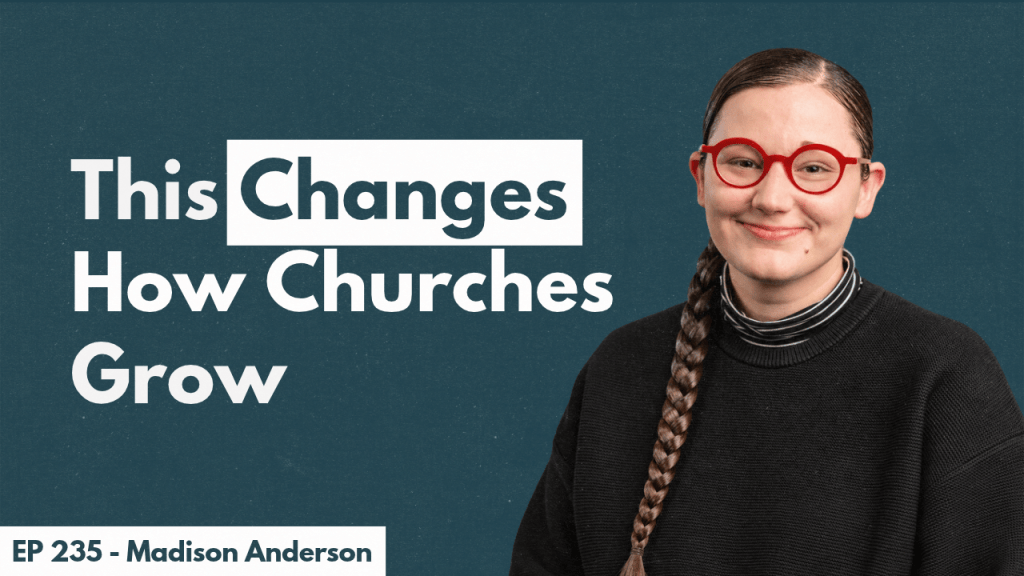
Social media has become one of the most powerful tools available to churches, but are we using it effectively? In this episode, I sit down with Madison Anderson, Creative Director at Calvary Tabernacle and Indiana Bible College in Indianapolis, to discuss digital evangelism, creative leadership, and the strategies that have helped their ministries reach thousands of people online.
When Madison first became involved with Calvary’s creative department, the church had a limited social media presence. Their Facebook page was primarily used for internal communication, and they didn’t have an established Instagram presence. Over the last five years, that has changed dramatically. Calvary has grown to more than 100,000 followers on each of its major social platforms, while Indiana Bible College has continued expanding its already significant digital reach.
What I found particularly interesting was Madison’s explanation of what actually contributed to that growth. It wasn’t necessarily a groundbreaking strategy or an obsession with going viral. Instead, it came down to consistency, understanding their audience, and developing systems that allowed them to capture and share meaningful content every single week. Madison explained that Calvary’s team follows a relatively simple process, consistently sharing worship and preaching clips while remaining intentional about the people they’re trying to reach.
One of the most significant parts of our conversation centred on the purpose of church social media. Madison shared that approximately 80% of Calvary’s first-time guests who complete their connection card identify social media as something that made them aware of the church or brought them to a service. That’s a remarkable reminder that social media isn’t simply about followers, views, or engagement. When approached intentionally, it can become an effective tool for reaching people who might otherwise never walk through our doors.
We also discussed the challenges of leading creative teams, giving constructive feedback, navigating social media trends, and deciding what content churches should share publicly. Madison offered some valuable insight into the difference between creating something because we personally like it and designing something that actually serves the people we’re trying to reach.
As Madison prepares to transition into a new role as Director of Strategy and Integration, we also talked about her unexpected journey into ministry and the importance of following God’s direction even when the path isn’t entirely clear. I appreciated her perspective on how much the creative landscape has changed and the opportunities that continue to emerge for people who want to use their abilities for the Kingdom.
10 Key Takeaways
1. Consistency produces results. Sustainable social media growth comes from regularly sharing quality content, not simply chasing viral moments.
2. Know who you’re trying to reach. Church social media should be intentional about connecting with people beyond the existing congregation.
3. Social media is an evangelism opportunity. Digital engagement can introduce people to your church and ultimately bring them into a service.
4. Build systems, not just content. Having a repeatable process for capturing, editing, and posting content makes consistency possible.
5. Don’t chase every trend. Understanding social media trends is helpful, but they should support your strategy rather than determine it.
6. Not every viral video is beneficial. Views and engagement aren’t always indicators that content is helping accomplish your ministry’s mission.
7. Create content people can understand. Be authentic about your Apostolic identity while considering how someone unfamiliar with your church might interpret what you’re sharing.
8. Understand the difference between art and design. Creative work in ministry should serve a purpose beyond our personal preferences.
9. Show the people behind the ministry. Worship and preaching are important, but sharing moments of fellowship and community helps people understand the personality of your church.
10. You don’t need everything figured out. God can open doors and develop opportunities that you may not have imagined when you first felt called to serve.
Links & Resources
Calvary Tabernacle: https://calvarytabindy.com/
Indiana Bible College: https://www.indianabible.college/
Calvary Tabernacle Careers: https://calvarytabindy.com/careers
Final Thought
One of the things that stood out to me throughout this conversation was how simple some of Madison’s most effective strategies really are.
It’s easy to look at a church with more than 100,000 followers and assume they must have access to resources, equipment, or expertise that most churches could never replicate. And while those things certainly help, Madison continually brought the conversation back to the power of consistency.
I think there’s an important lesson in that for all of us. We don’t necessarily need to reinvent everything we’re doing. Sometimes we need to get better at identifying what works, developing a plan, and faithfully executing it.
Ultimately, our goal isn’t to build a following but it is to make a difference in people’s lives and use every opportunity available to share the Gospel.
Connect with us on social:
Instagram: @thehackapodcast
Facebook: The Hacka Podcast
YouTube: Subscribe Here


Leave a Reply